The Boy Travellers in the Russian Empire
Catalogued August 26, 2026
The Work
Drew's Copy
Acquisition & Provenance
How This Copy Came to the Library
This was the first Boy Travellers book I purchased. I found it through an online used-book reseller for what now seems like an extraordinarily low price—somewhere around $25 to $30.
Copies of this particular volume have since become extremely difficult to buy at a reasonable price. Current online asking prices for presentable copies often begin around $700, while the cheaper listings tend to be badly tattered or affected by mold. The clustering of high reseller prices feels artificial and deeply frustrating to me, especially for a book that ought to remain accessible to readers and collectors rather than becoming a speculative object.
Why This Book Is in My Library
This was Drew’s first Boy Travellers book, and reading its opening chapters alongside The Brothers Karamazov gave the volume a lasting personal significance.Place in My Physical Library
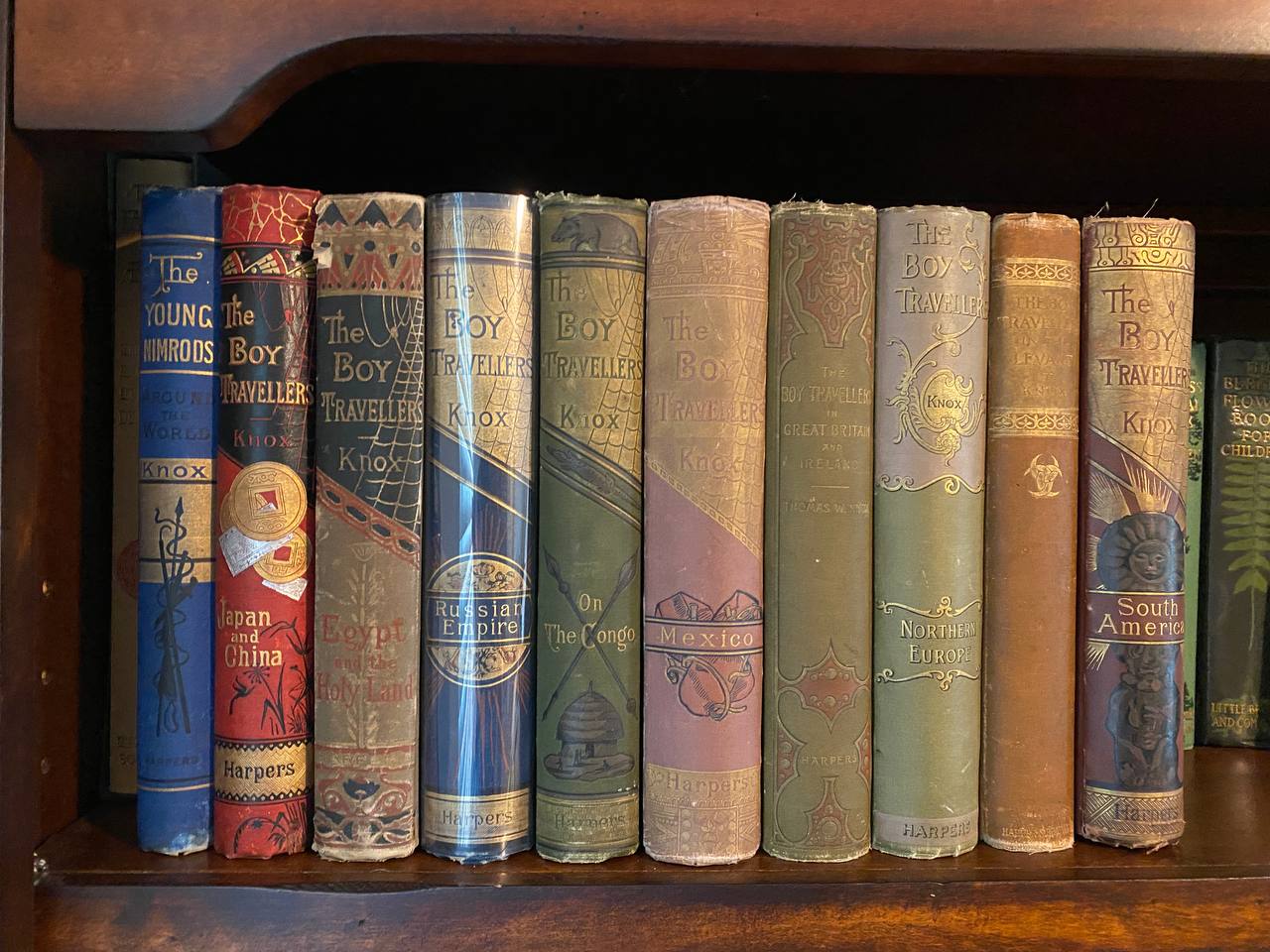
This volume stands with Drew’s growing shelf of Thomas W. Knox travel and adventure books. As the first Boy Travellers volume he acquired, it became the beginning of the larger group now gathered there.About This Copy
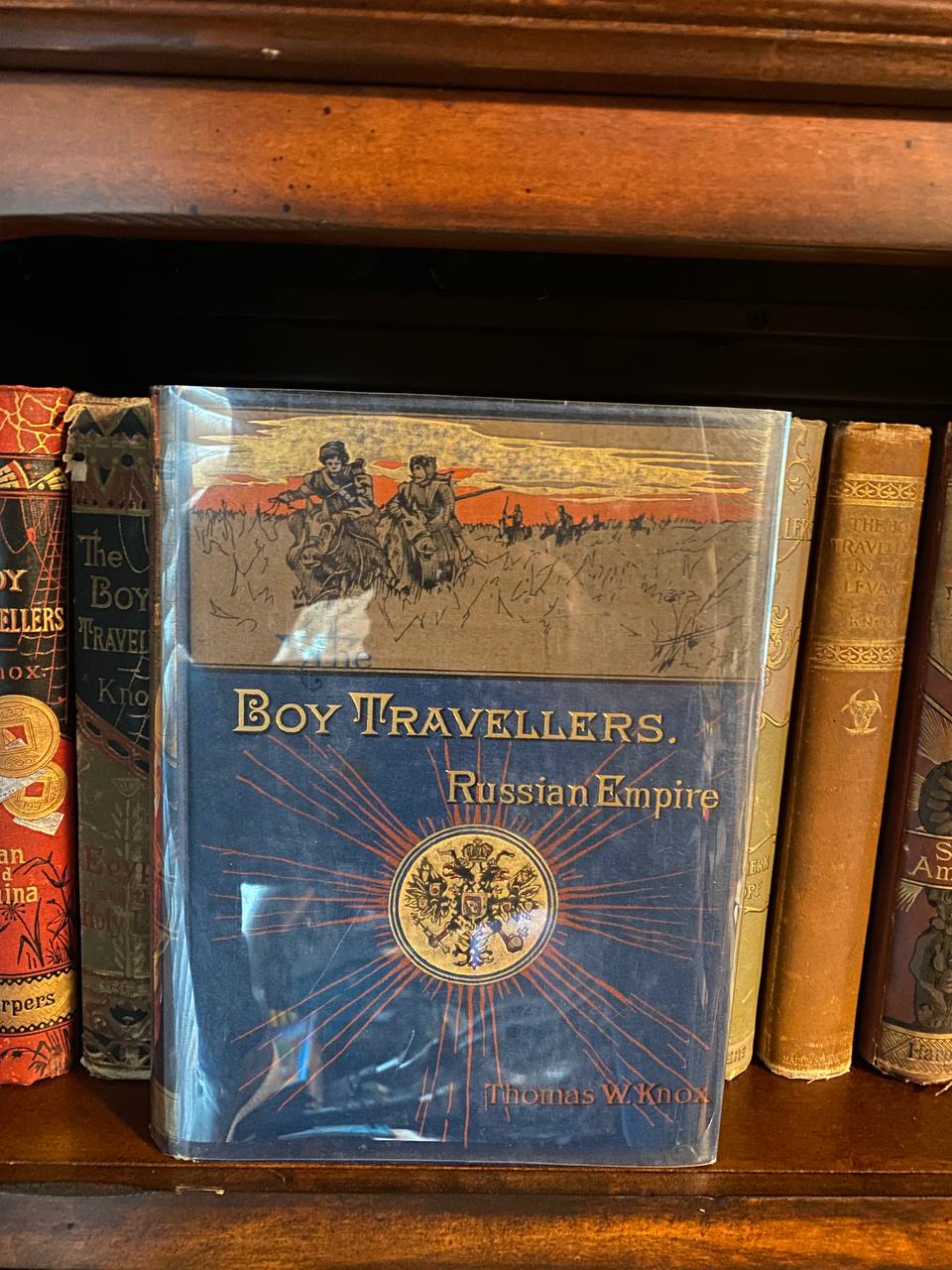
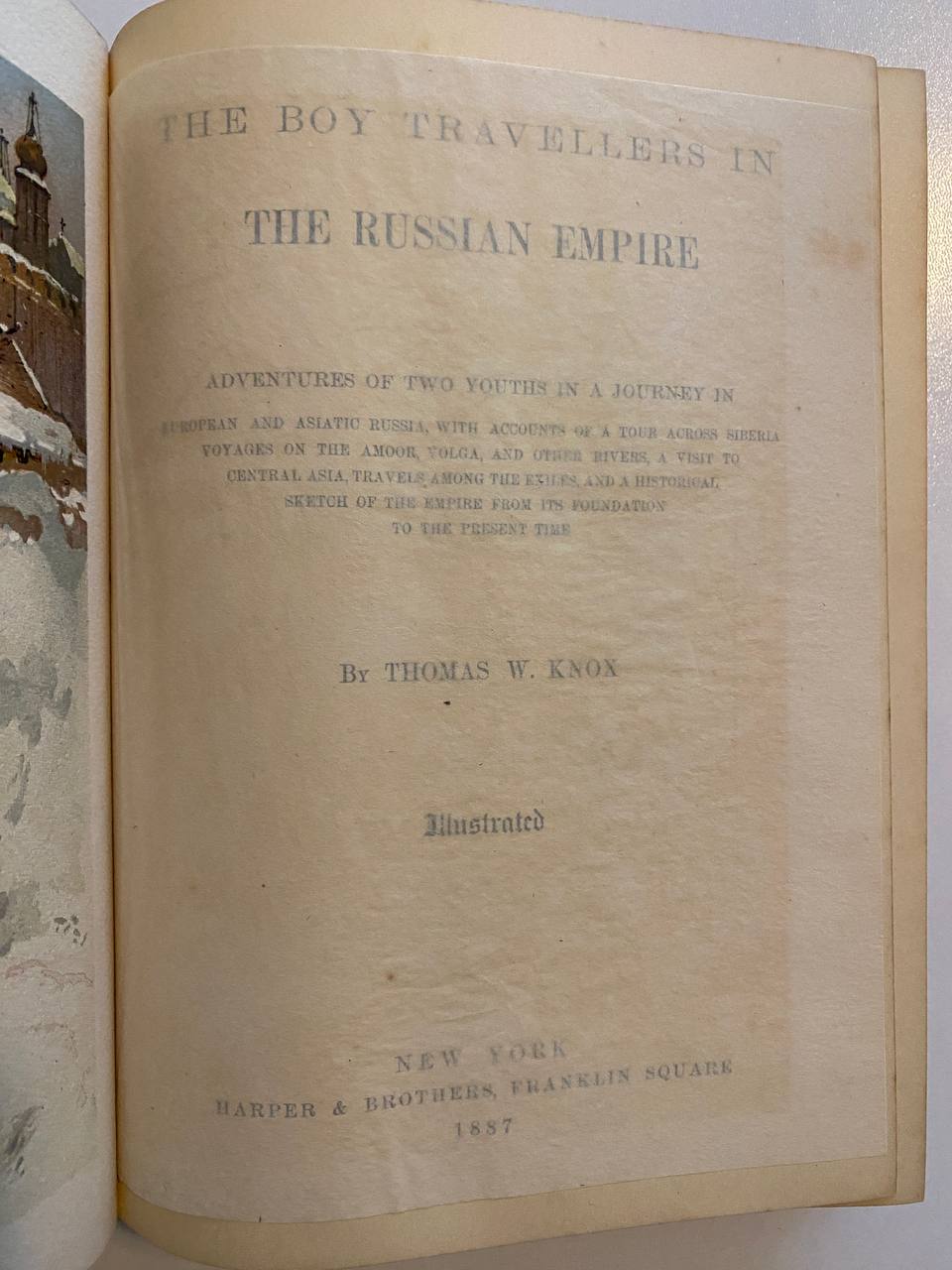
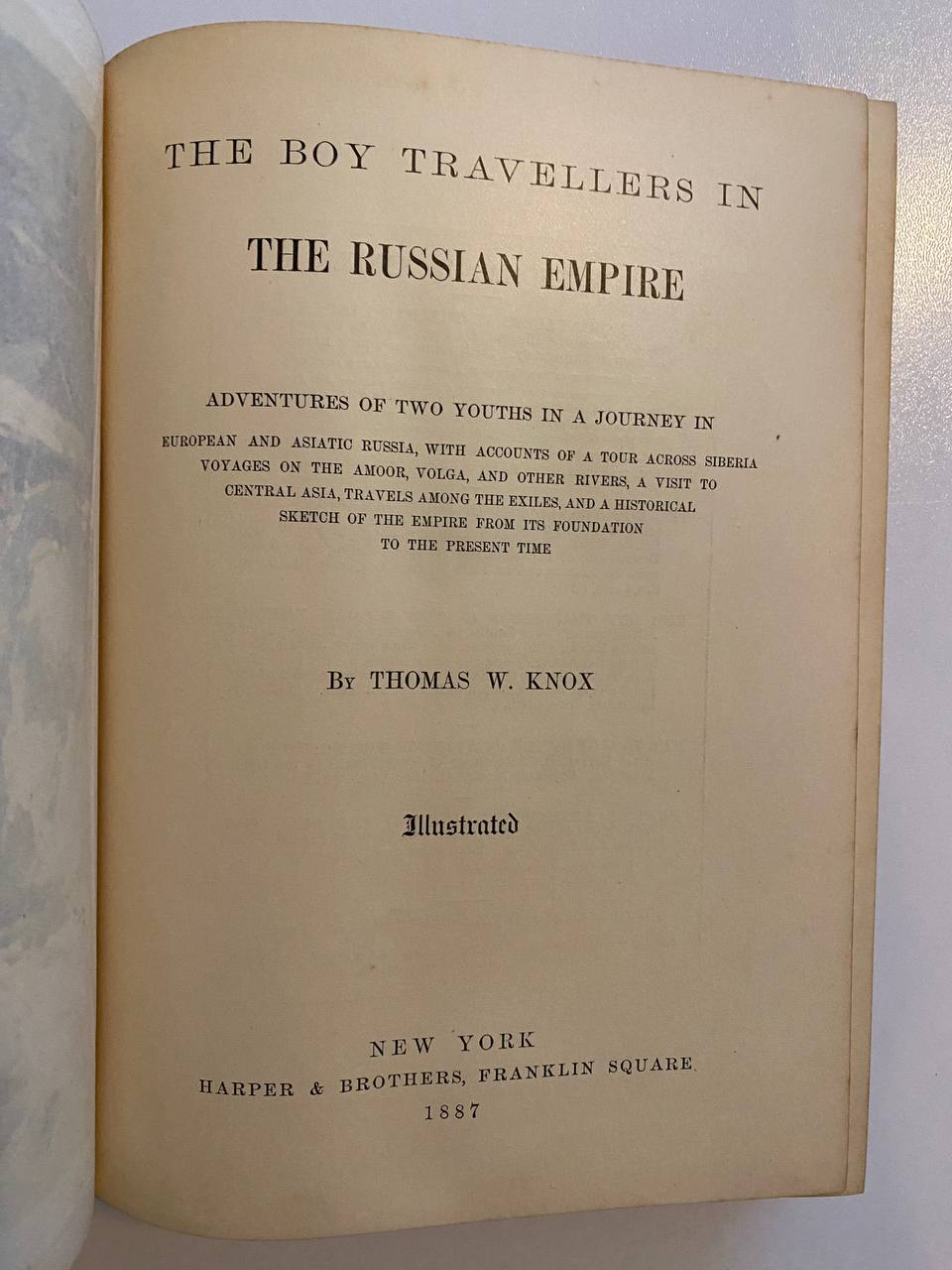
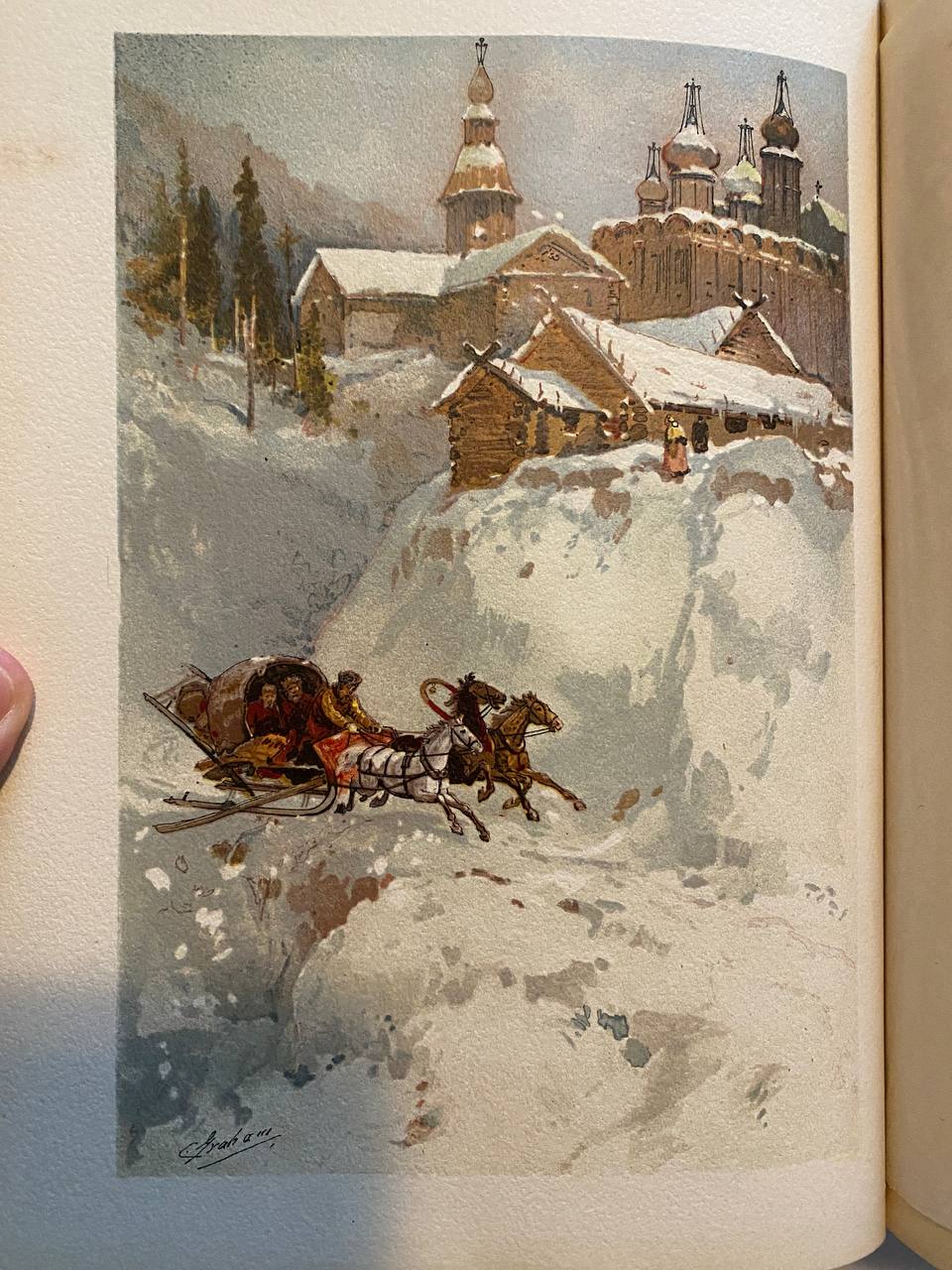
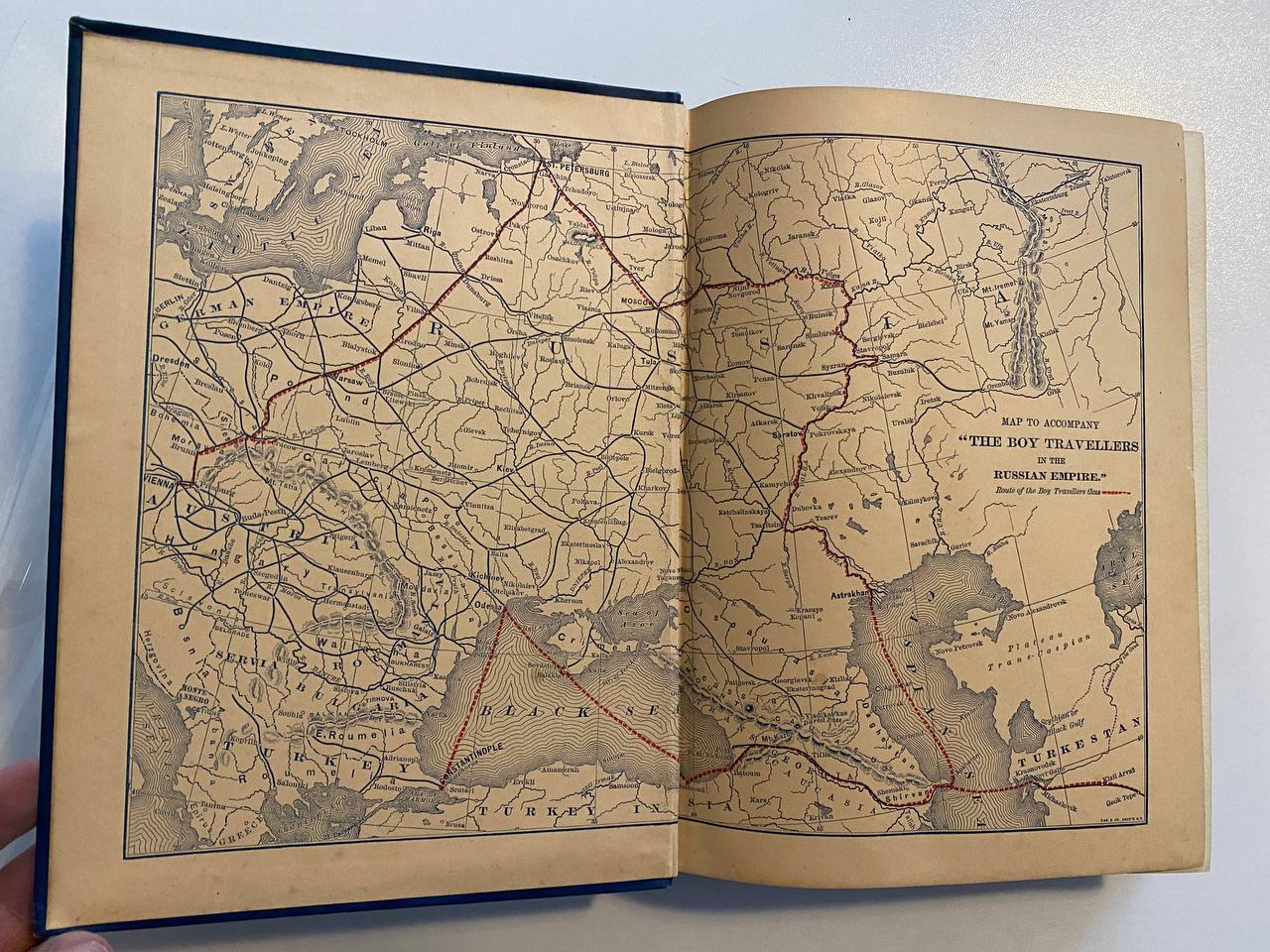
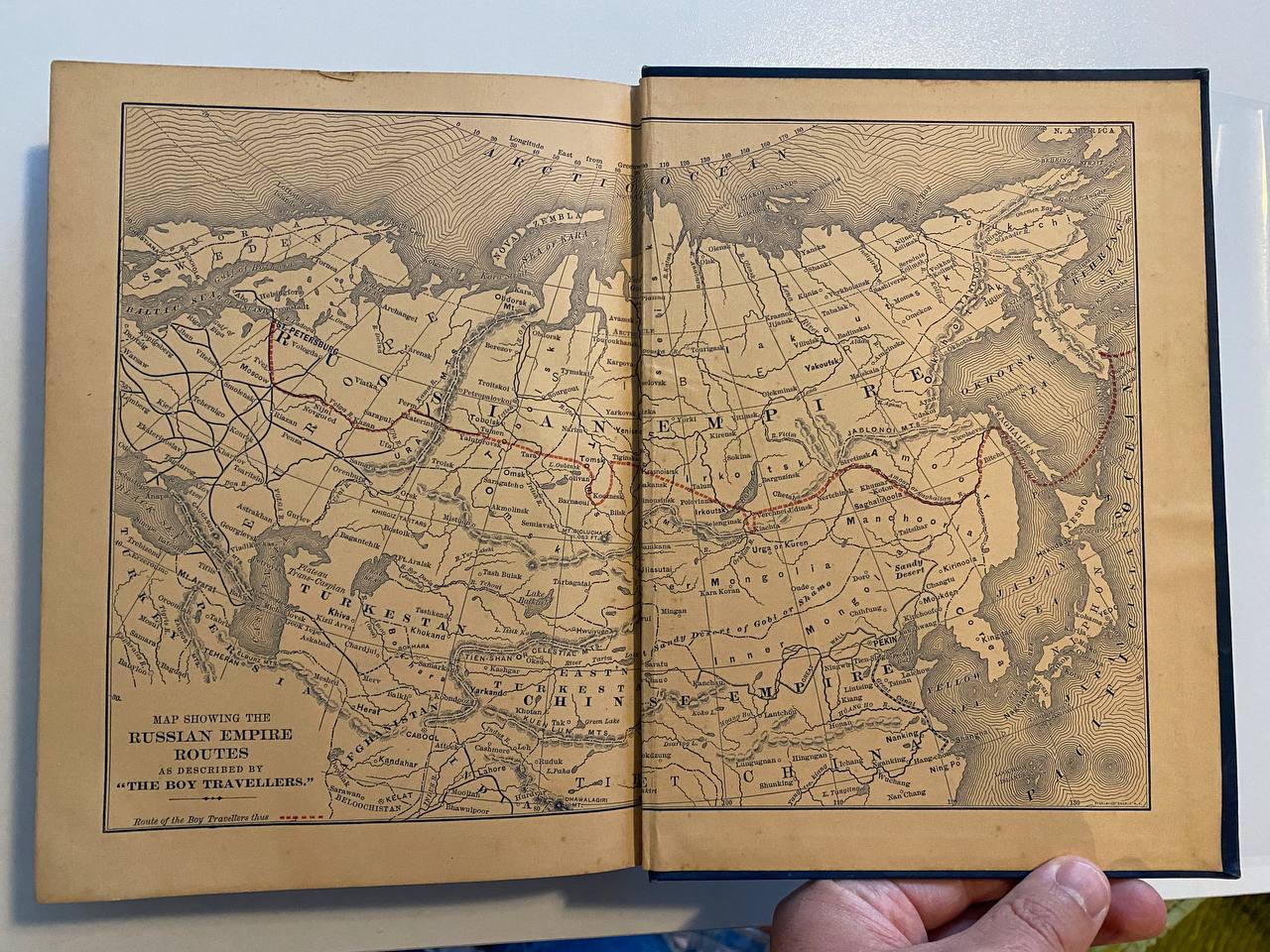
This 1887 Harper & Brothers edition is one of the stronger physical copies on my Knox shelf. Its pictorial blue binding remains attractive, and both maps survive: one tracing the travellers’ route through European Russia and another spanning the Russian Empire across Siberia to the Pacific. A color plate signed by C. Graham depicts a winter sleigh scene below onion-domed churches.
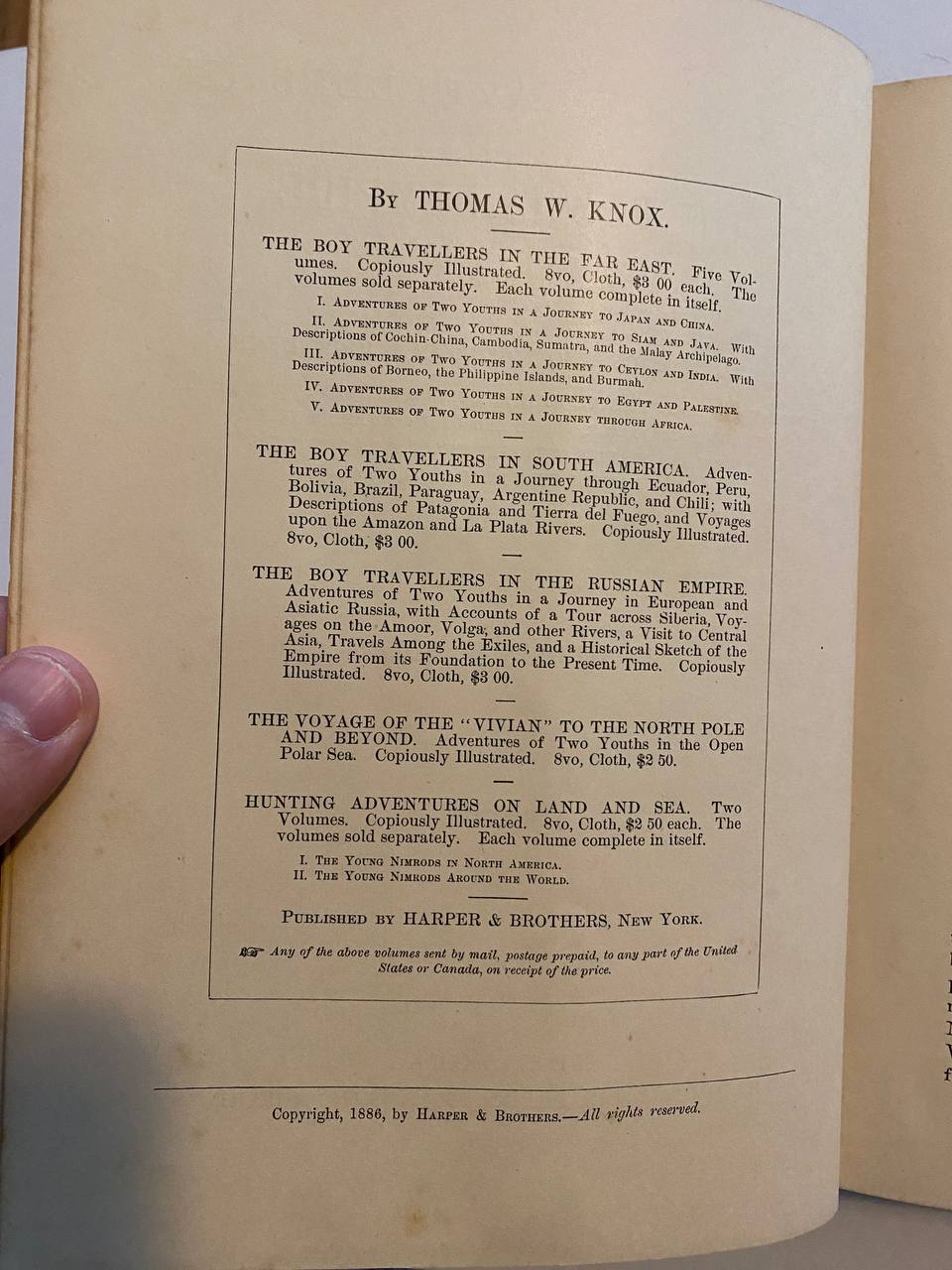
The publisher’s catalogue opposite the copyright notice is also useful evidence. It lists the five Far East volumes, South America, The Russian Empire, The Voyage of the Vivian, and the two Young Nimrods books with their original prices, placing this volume within Knox’s larger body of illustrated travel adventures as Harper marketed it in the 1880s.
Memories & Connections
I bought this while I was reading Dostoevsky’s The Brothers Karamazov. Partway through the novel, I paused to read the opening chapters of Knox’s book. Although Dostoevsky’s story is set somewhat earlier, both works belong to the world of imperial Russia, and reading Knox alongside the novel added tremendously to the experience.
Knox supplied geographic, social, and historical context that filled gaps in my understanding. His maps and travel narrative gave physical shape to a world that Dostoevsky’s characters inhabited from within. Together, the books offered two very different windows into late nineteenth-century Russia—one through a Russian novelist’s moral and psychological world, the other through an American traveller’s outward-looking account of the empire during its final decades.
This book began Drew’s Boy Travellers collection and became an unexpected companion to his reading of The Brothers Karamazov.
Ten Boy Travellers volumes by Thomas W. Knox, collected as artifacts of American travel writing, childhood reading, and the rapidly changing world of the 1880s and 1890s.
Explore the collection