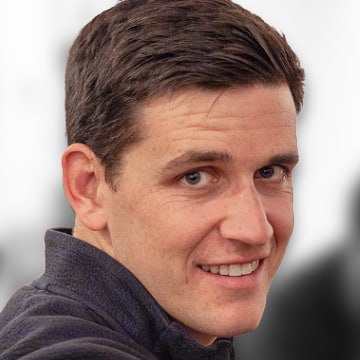
I use AI throughout the process of building The Drew Archive. In addition to architecting the site, that process has started to aid in producing the content that populates the archive. Sometimes it catches a typo. Sometimes it reorganizes a draft. Sometimes I describe a feature in a Telegram message and my agent and I collaboratively build it. The AI agent writes the code, tests it, and prepares it for publication. It can also use the history of that work to draft the technical article documenting what we built.
That range is useful, but it creates a problem: the finished page does not tell a reader how much of it came from me and how much came from an AI system.
I recently watched a conversation between Nate B. Jones and Substack co-founder and CEO Chris Best about AI writing, “slop,” and the changing relationship between writers and readers. It gave me a useful way to think about the problem and became much of the inspiration for the AI disclosure system now used on this site.
AI Use Is Not the Same as AI Slop #
One of the most useful distinctions in the conversation was that not all AI-generated writing is slop, and not all slop is generated by AI.
The real dividing line is whether someone is using a tool to make something they actually believe in, or using it to avoid the work of believing in anything at all. An author can use AI like a paintbrush while still supplying the intent, experience, argument, and judgment. At the other extreme, someone can ask a model to generate a thousand posts they may never read simply to flood a feed or manipulate search results.
I am not interested in pretending that useful writing must be produced without modern tools. I am also not comfortable presenting heavily AI-drafted prose as though every sentence came directly from me. The ideas may be mine. The project may be mine. I may have directed the work and approved the result. But if the words were largely produced by a model, that is part of the history of the article.
Readers should be able to know that.
The Implicit Contract With a Reader #
Best described the problem as a mismatch between what a reader expects and what actually happened. The technology itself is not necessarily the betrayal. The betrayal comes when the reader believes a person made one kind of investment—time and attention—while the creator quietly made another.
That is especially relevant here because I often write in the first person. A reader reasonably assumes that a first-person essay represents not only my views, but also my own expression of them.
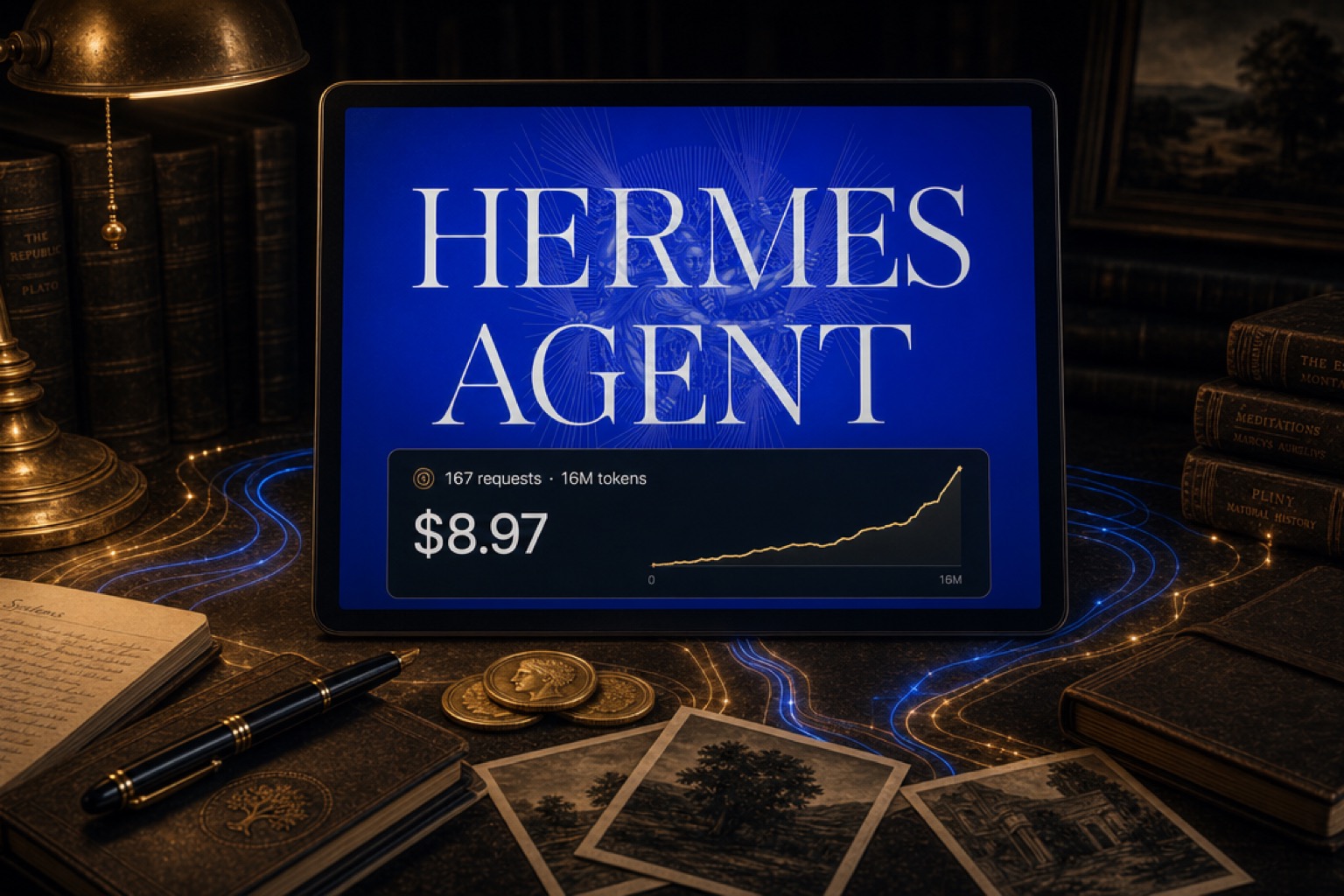
Consider the article about bringing comments to The Drew Archive. I initiated the project and made the decisions. I explained what I wanted through conversational instructions. ChatGPT summarized the original discussion and produced an initial article and implementation prompt. I then gave that material to OpenClaw, which had the additional technical context from implementing and deploying the feature. OpenClaw turned the combined history into a detailed post, and I reviewed and approved it.
The article accurately documents a project I directed. It preserves technical details well enough to help reproduce the work. But most of its prose was not written by me. Without a disclosure, the page would leave a false impression about how it came into existence.
That does not make the article worthless. It makes its production history relevant. I spent the time to implement the comments, I wanted to document it, and the details are useful to anyone who wants to implement a similar comment system. For me, that article has value and continues the story of the archive’s buildout.
What Substack’s Approach Got Right #
Substack’s first step was not to prohibit AI writing. It introduced a Pangram-powered scan that can estimate whether long-form text passed through a language model. The conversation was careful about the limitation: detection can provide a signal about how text was generated, but it cannot determine whether the writer cared, thought deeply, or stood behind the result.
Substack also began giving writers a way to add context about how they make their work. That part piqued my interest.
Responsible AI use should stand up to transparency. A writer should be able to say which tools were involved, what they did, and what remained the writer’s responsibility. Then the reader can decide whether that process matters to them. It is also just interesting to share the creative process, especially while these tools are still so new.
I wanted to bring that principle to my own site without turning every byline into a warning label or making AI the visual focus of the page.
The System I Built #
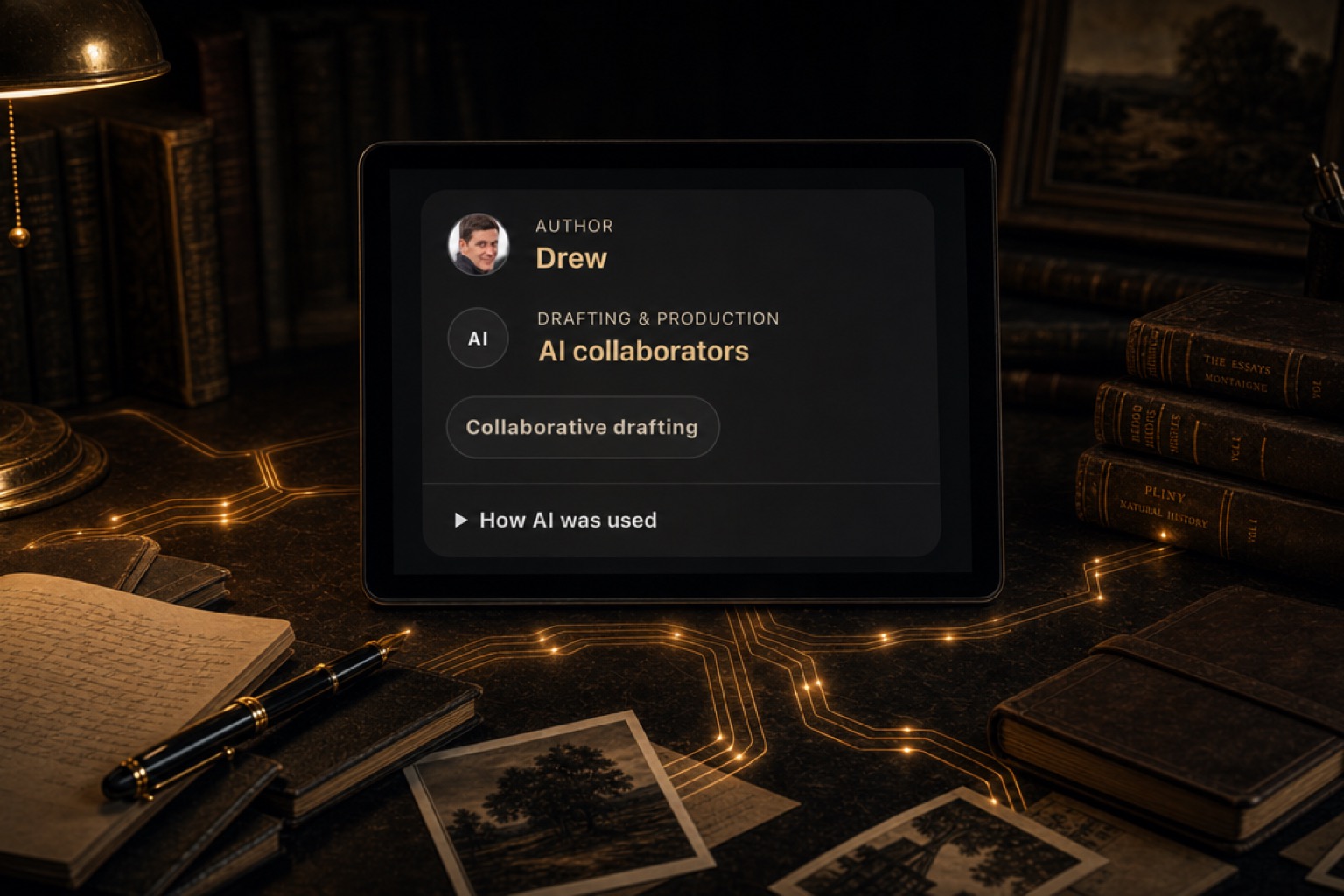
Every article on The Drew Archive now identifies me as the author. When AI meaningfully contributed to a post, the article also identifies AI collaborators and assigns one of four levels:
- Light assistance — spelling, grammar, formatting, or minor suggestions.
- Editorial assistance — restructuring or revising prose I substantially wrote.
- Collaborative drafting — AI and I both contributed meaningful portions of the draft.
- AI-drafted — I supplied the experience, direction, and approval, but AI produced most of the prose.
The level appears as a subdued label rather than a score or a judgment. Each classified article includes a specific “How AI was used” disclosure describing the actual workflow. The realm-level article cards carry the same information in a small line so readers can see it before opening the post. A separate AI Collaborators and Editorial Transparency page explains the four levels.
I also added the policy to the Colophon as a standing principle: when AI meaningfully shapes a post, its contribution is clearly labeled.
After building the system, I had OpenClaw review the existing archive for posts with credible evidence of AI involvement. Five were classified: two as AI-drafted and three as editorial assistance. There is still additional AI disclosure to add to some older content. OpenClaw did not label older posts merely because they sounded polished or because an AI detector might produce a score. It classified only the posts it could identify with confidence from retained project history and the actual production process.
Authorship Still Means Responsibility #
The disclosure system separates authorship from production without pretending they have nothing to do with each other.
I remain responsible for what appears under my name. An AI system cannot hold a belief, remember an experience as its own, or accept responsibility for publishing a claim. I supply the purpose, judgment, and final approval. At the same time, readers deserve to know when a system drafted, reorganized, researched, or technically documented the work.
That is why the site lists me as the author and describes AI as a collaborator in drafting or production. It acknowledges the tool’s real contribution without treating it as a person or using it to dilute my responsibility.
This Article Is Part of the Experiment #
This post is itself labeled Collaborative drafting.
I chose the source conversation, explained why it mattered to me, supplied the history of the feature, and asked OpenClaw to consult the archived transcript and our implementation record. OpenClaw drafted the article from that material. I copied the article into an Obsidian note on my phone, read it in its entirety, rewrote sentences, and added context and editorial commentary before approving it.
That is exactly the kind of workflow the disclosure system is meant to describe.
AI makes it possible for me to document projects that might otherwise remain scattered across chat threads, commits, and technical notes. That is valuable. The answer is not to hide the process or to abandon the tools. The answer is to preserve the human intent, remain accountable for the result, and tell the reader how the work was made.
Transparency does not settle every question about AI and authorship. Trust me, I am as skeptical as anyone about AI. But it is also a tool I have been able to leverage to express myself at a point in my life when I otherwise would not be able to produce much content. Just look at this website: I built it completely through collaboration with my AI agents from my phone.
The system is not perfect, but it establishes a better starting point: no guessing, no quiet substitution, and no need to pretend that useful collaboration did not happen. At this point, I think we can all intuit when AI may be involved, so there is no reason not to share how I am using it.
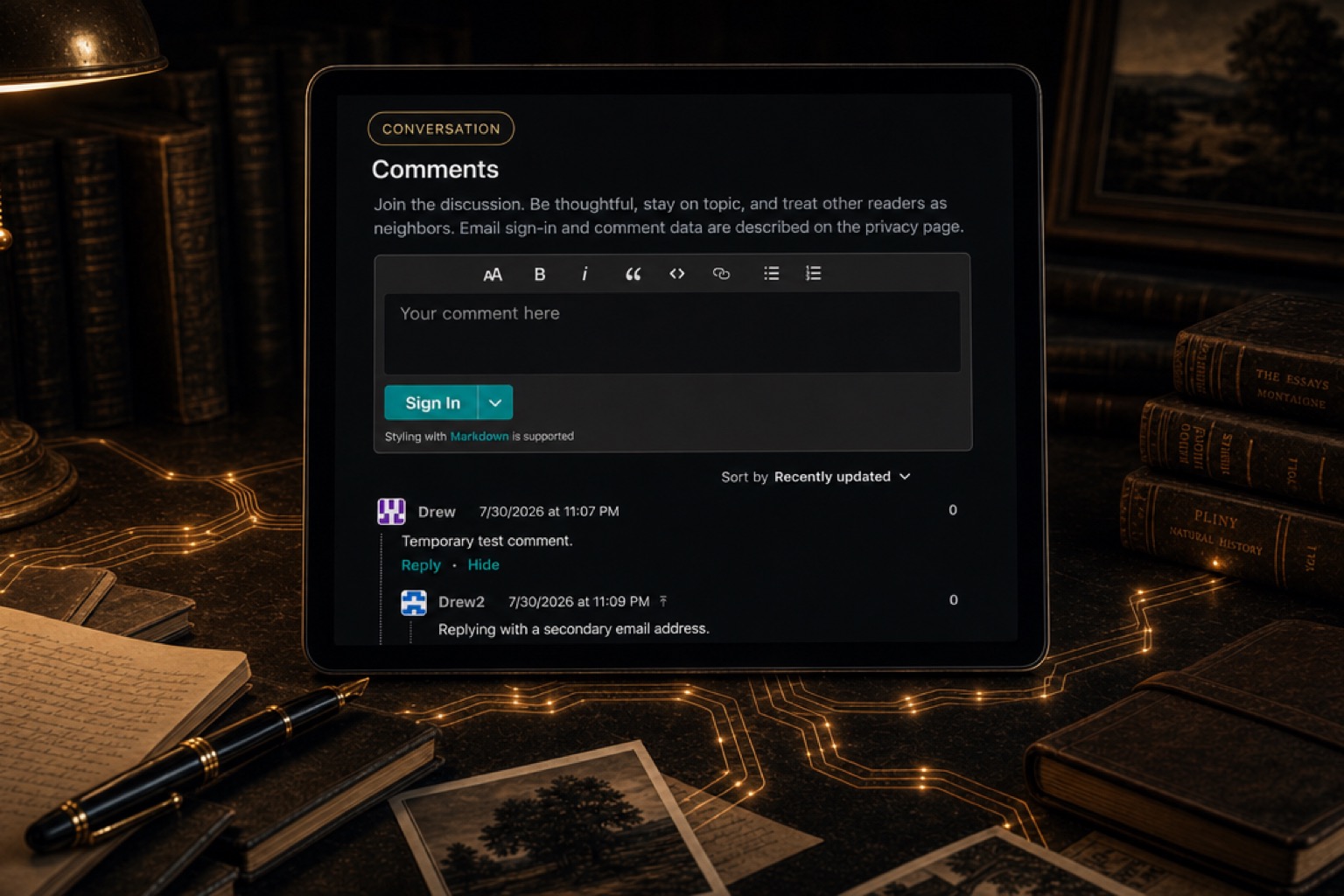
Comments
Join the discussion. Be thoughtful, stay on topic, and treat other readers as neighbors. Email sign-in and comment data are described on the privacy page.