
I have always had a soft spot for owning my own infrastructure. That goes back to my love for the open-source community.
These days, though, I do not have the time or freedom to go all in on open source the way I once might have. I am simply not in that phase of life anymore. And yes, I know that is partly because I have grown used to proprietary tools.
Still, I try to follow one guiding principle:
Own your own infrastructure whenever it makes sense.
That is why The Drew Archive runs on a VPS instead of a website builder. It is why I use Hugo. It is why the site has comments instead of pushing every discussion onto social media. It is why I plan to use privacy-respecting analytics instead of handing visitor data to Google.
So when it came time to add email, my first instinct was not to pay someone else to host it.
I had already been down the self-hosting road.
Years ago, I set up my own mail server using Luke Smith’s mail server scripts. It worked fantastically.
Until it didn’t.
Email is one of those strange corners of the internet where getting a message from point A to point B is only a small part of the problem. Spam filtering, IP reputation, DKIM, SPF, DMARC, reverse DNS, blacklists, deliverability, and the constantly changing expectations of Gmail and Outlook all become part of your life.
The server is not merely running. It is constantly asking for attention.
Eventually, I realized something important: I do not have the bandwidth to maintain every piece of infrastructure I would like to run.
Owning your infrastructure does not necessarily mean running every service yourself.
Sometimes it means making deliberate choices about where responsibility belongs.
A personal website?
Absolutely.
Comments?
Yes.
Analytics?
Definitely.
A mail server?
Probably not.
The need for email became much more immediate earlier this week.
I have a video on YouTube about the Great Books of the Western World. It does not get an enormous number of views, but it gets them consistently. It is the only truly evergreen piece of content on my small channel. People keep finding it, and they seem to genuinely appreciate it.
Earlier this week, someone watched that video and left a comment. We went back and forth for a while. Then he found one of my more obscure videos, asked a question there, and I answered it. After that, he asked if he could interview me.
I froze a little.
For one thing, I have never been interviewed as an internet personality. More practically, I realized that I had no clear way for him to contact me outside the YouTube comments section.
Email had been something I knew I needed for a long time. I kept putting it off because my experience self-hosting email had made the whole subject feel difficult. But this exchange made the cost of waiting obvious. If someone wants to interview me, collaborate with me, or simply continue a conversation away from a public comment section, there needs to be an easy way to reach me.
Now there is.
So instead of resurrecting my old setup, I chose Fastmail.
Not because I wanted someone else to own my email, but because I wanted someone else to specialize in running one of the hardest internet services well.
That leaves me more time for the part I actually care about:
Creating.
The Setup #
The Archive now has its own permanent email home.
Primary mailbox:
Public contact address:
Additional aliases:
hello@thedrewarchive.com donations@thedrewarchive.com press@thedrewarchive.com
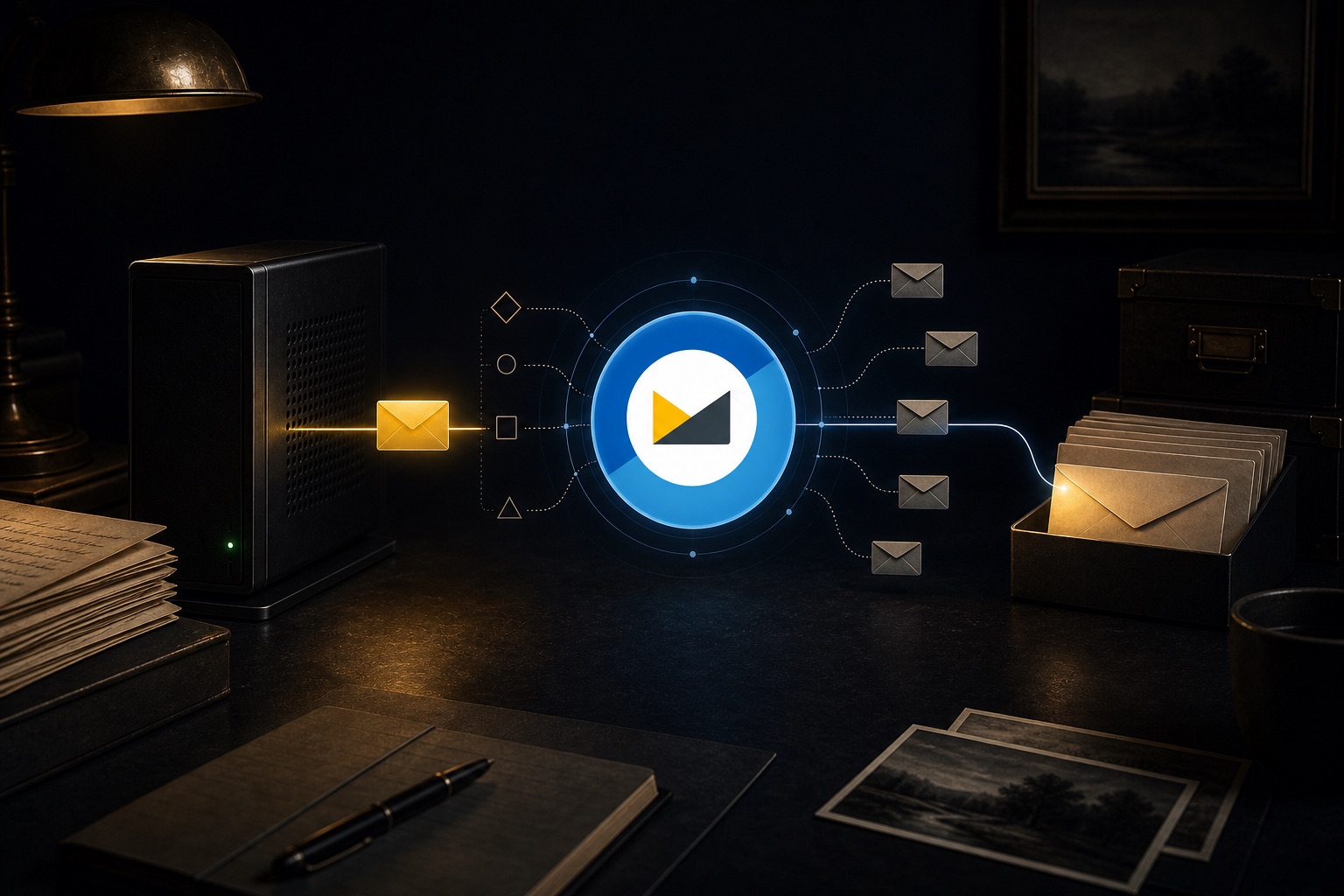
Everything routes into a single inbox.
From the outside, each address has its own purpose. Behind the scenes, the system stays simple.
Doing It Properly #
Getting an address was not enough.
The goal was to make email feel like a professional part of the site.
That meant configuring:
MX records SPF DKIM DMARC DNS verification Sending identities Signatures Alias routing Mobile access
It is the kind of work visitors never notice unless something is missing.
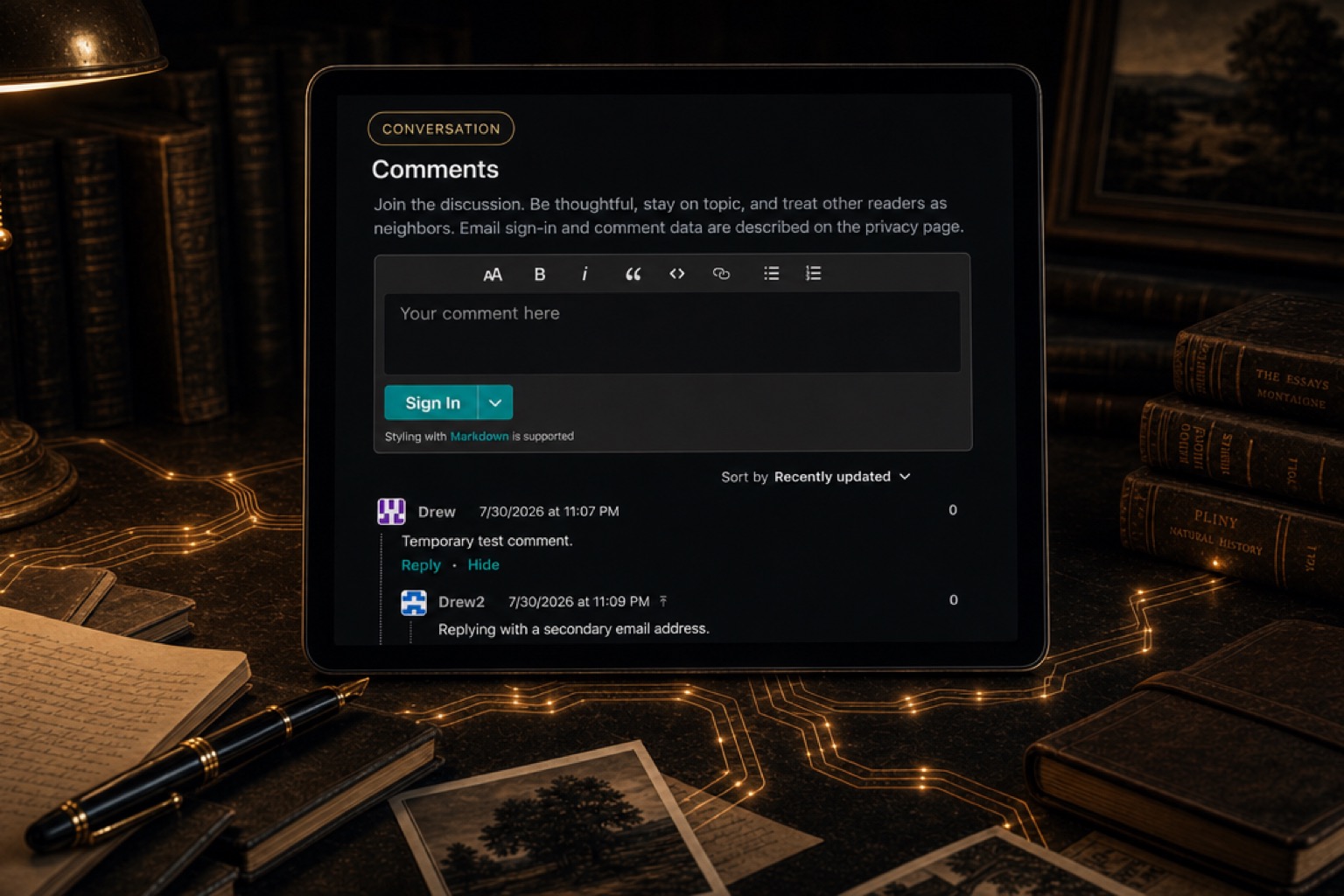
Comments
Join the discussion. Be thoughtful, stay on topic, and treat other readers as neighbors. Email sign-in and comment data are described on the privacy page.