
For a long time I avoided putting analytics on The Drew Archive. Not because I didn’t want to know whether anyone was reading, but because I didn’t want to build a site around collecting data on its visitors.
There’s an irony to much of the modern web: the tools built to help you understand your audience often end up knowing far more about that audience than you ever meant to collect. That never sat particularly well with me.
What I Actually Want to Know #
I don’t need detailed behavioral profiles. I don’t need advertising identifiers. I don’t need to know what someone did before arriving here or where they went afterward. Mostly, I’m curious about a handful of simple questions:
Which articles are people reading? How did they find the site? What topics seem to resonate? Is the structure of the Archive helping people discover related ideas?
Those questions help me build a better archive. They don’t require turning readers into datasets.
Choosing GoatCounter #
After auditing the server and looking at a few self-hosted analytics platforms, I settled on GoatCounter. It’s intentionally small — it runs on my own server, stores its own data, and doesn’t need cookies or persistent visitor profiles.
It also respects browser privacy preferences like Do Not Track and Global Privacy Control. If someone has explicitly asked not to be tracked, the site simply honors that. That feels like the right default.
The Archive’s Privacy page explains exactly what GoatCounter records, what it does not collect, and how analytics fit alongside the site’s server logs, comments, email, and encrypted backups.
Keeping Things Simple #
The setup stays intentionally modest: no custom events, no heat maps, no session replay, no advertising integrations, no attempt to follow visitors around the internet. Just enough to understand whether the Archive is becoming easier to navigate and more useful over time.
I suspect I’ll glance at the dashboard every so often, but I don’t want to spend my days watching graphs.
The goal isn’t to chase traffic. The goal is to build something worth returning to.


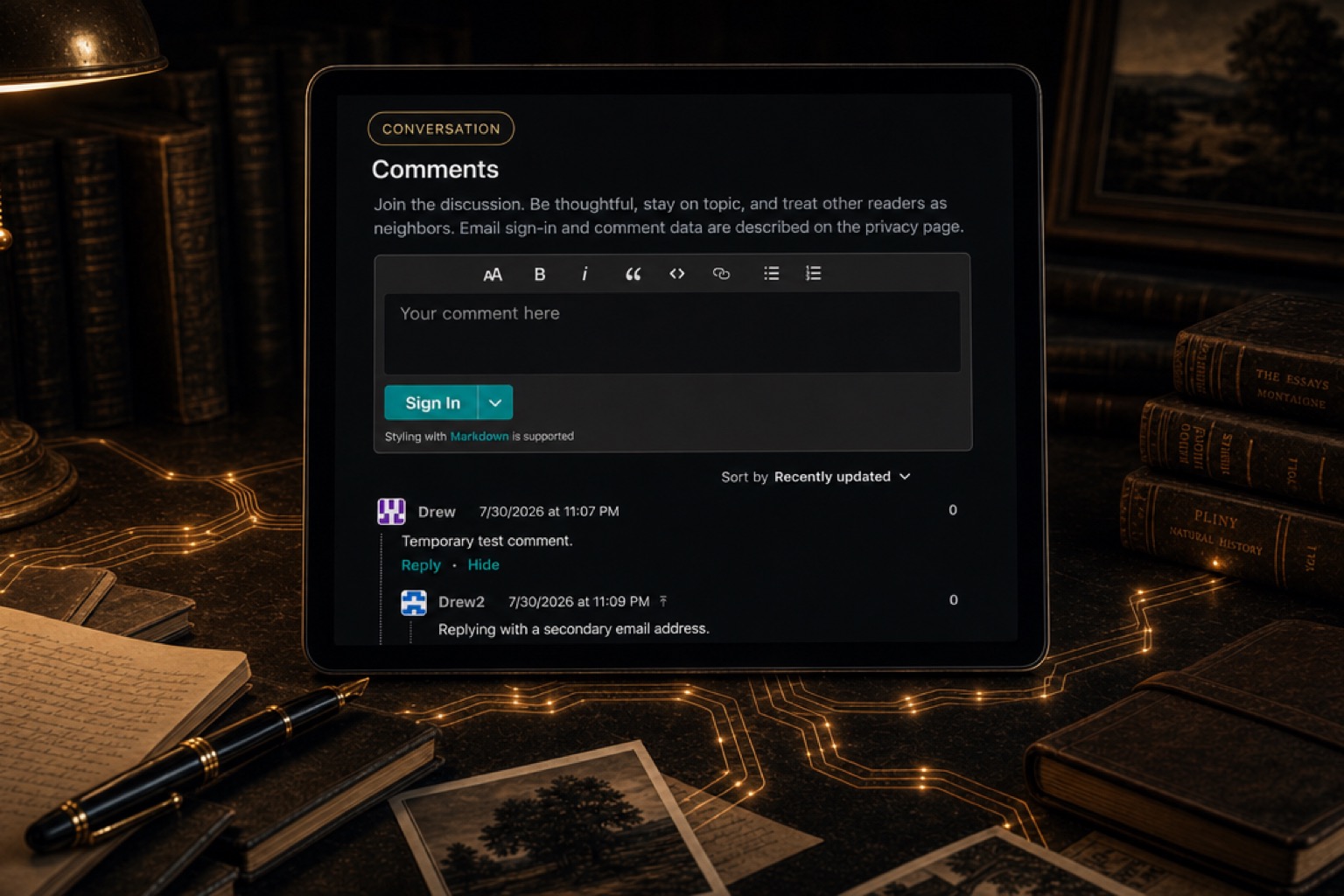
Comments
Join the discussion. Be thoughtful, stay on topic, and treat other readers as neighbors. Email sign-in and comment data are described on the privacy page.